That's the goal of a smaller military under Secretary of Defense, Chuck Hagel. Inevitable discussions turn to downsizing after a war (on in this case two). Military forces have to grow to meet the increased OPSTEMPO but once they forces are withdrawn, there is little reason to maintain large numbers of troops and equipment.
According to USATODAY, the Secretary said "To that end, the Pentagon is liquidating much of its $40 billion fleet of Mine Resistant Ambush Protected vehicles, the signature truck of the wars in Iraq and Afghanistan. They're heavy and lumbering and associated with wars of occupation. Definitely passé." Interesting, a similar mindset in the late 1950s said missiles meant that fighter jets would no longer need to be armed with canons. Then in the Vietnam war it was determined that the F-4s were are a tremendous disadvantage because they lacked canons. Or the mindset that said large maneuvering units fighting in the desert were a thing of the past…until Desert Storm. Or what about the mindset that wanted to ignore the guerrilla type warfare of Vietnam…only to see it again in Afghanistan.
Let's be honest. The Department of Defense is looking to cut its budget and is using these arguments to support that end. If you want a truly expeditionary, quick reaction force you already have it in the US Marine Corps. The doctrine of the USMC (MCDP 1-1, dated 1997) it states, "The United States Marine Corps is a key instrument in the execution of American national strategy. Marine expeditionary forces possess extraordinary strategic reach. As an expeditionary force-in-readines, the Marine Corps has been consistently called upon to implement key elements of our national security strategy and its supporting national military strategy."--FAS.ORG
The Marine Corps is designed to be light and lethal. For long term engagements, the Army follows with heavy forces. Making the Army lighter doesn't make much sense as that's not what they do or how units are doctrinally created.
The Army is already on a path to shrink from 540,000 soldiers to about 490,000 by the end of 2015, and will likely slide further to 420,000 by 2019, according to reports. (Defense News)
Why then do we need to look elsewhere for a nimble, small force able to rapidly respond? According to Paul McLeary in Defense News, "Instead, look for an Army with fewer soldiers and more robots".
Robots don't require pay, medical benefits or pensions. They also very good for OPSEC as they don't tell their friends or sweethearts were they are going or what they've done. Robots don't need promotions or incentive pay. Robots don't talk to the press.
Future wars (and the future is very soon) will see more robots (both air as well as ground) waging combat as well as performing logistics functions. The move towards more robots brings up a very ugly eventuality that without risking American lives Washington will become more willing to send drones into harm's way. If there is no risk to us, what incentive do future Presidents and members of Congress have to not send in a force of robot soldiers to quell hostilities in some country? How will we even know?
Update: Gen McChrystal was quoted in RT.com talking about drones, "“There's a danger that something feels easy to do and without the risk to yourself, almost antiseptic to the person shooting, doesn't feel that way at the point of impact. And so it lowers the threshold for taking operations because it feels easy, there's a danger in that"

“If you would not be forgotten, as soon as you are dead and rotten, either write things worth reading, or do things worth the writing.”--Benjamin Franklin
Showing posts with label sequester. Show all posts
Showing posts with label sequester. Show all posts
Wednesday, January 22, 2014


Tuesday, April 9, 2013
Of sequester and North Korea
NPR has been spending much effort to broadcast stories demonstrating that Sequester has NOT had any of the adverse effects predicted by critics of the Obama administration. Fair enough except after I had finished listening to NPR, I then read this on my Facebook timeline;
"Air Force officials will begin to stand down active-duty combat units starting April 9 to ensure the remaining units supporting worldwide operations can maintain sufficient readiness through the remainder of the fiscal year. The stand down is the result of cuts to Air Combat Command's operations and maintenance account, which must be implemented in part by flying approximately 45,000 fewer training hours between now and Oct 1." U.S. Air Force
I can only assume that NPR had not read this story.
In keeping with this "Baghdad Bob" moment, yesterday a professor from a university that shall remain nameless appeared on a local morning news show to state emphatically that all of this concern about North Korea was totally unfounded. As the Wizard of Oz famously says, "Ignore the man behind the curtain" or Pyongyang. He is an expert on North Korea and has written at least one book on the subject so he definitely has the credentials that I don't.
Except then I read this on the New York Times; "North Korea warned foreigners on Tuesday that they might want to leave South Korea because the peninsula was on the brink of nuclear war — a statement that analysts dismissed as hyperbole — the American commander in the Pacific expressed worries that the North’s young leader, Kim Jong-un, might not have left himself an easy exit to reduce tensions." NY Times
The whole sentence is amazing example of towing the party line. The NY Times manages to call it hyperbole on one hand but then quotes the PACOM commander as if to hedge their bets. I think the professor may have been consulted.
The two nonsequiturs are in fact part of a continuum of delusion. Sequester is most assuredly going to impact the United States (contrary to the assurances of the NPR pieces), minimally by causing the Department of Defense to furlough personnel and to eliminate routine training missions. In-turn this may emboldened our favorite North Korean madman to increase the threats. What the professor and NY Times both miss is Kim Jung Un is a young, unknown tyrant who believes his father and grandfathers dreams are his destiny to fulfill. He is not going to behave the same as his ancestors.
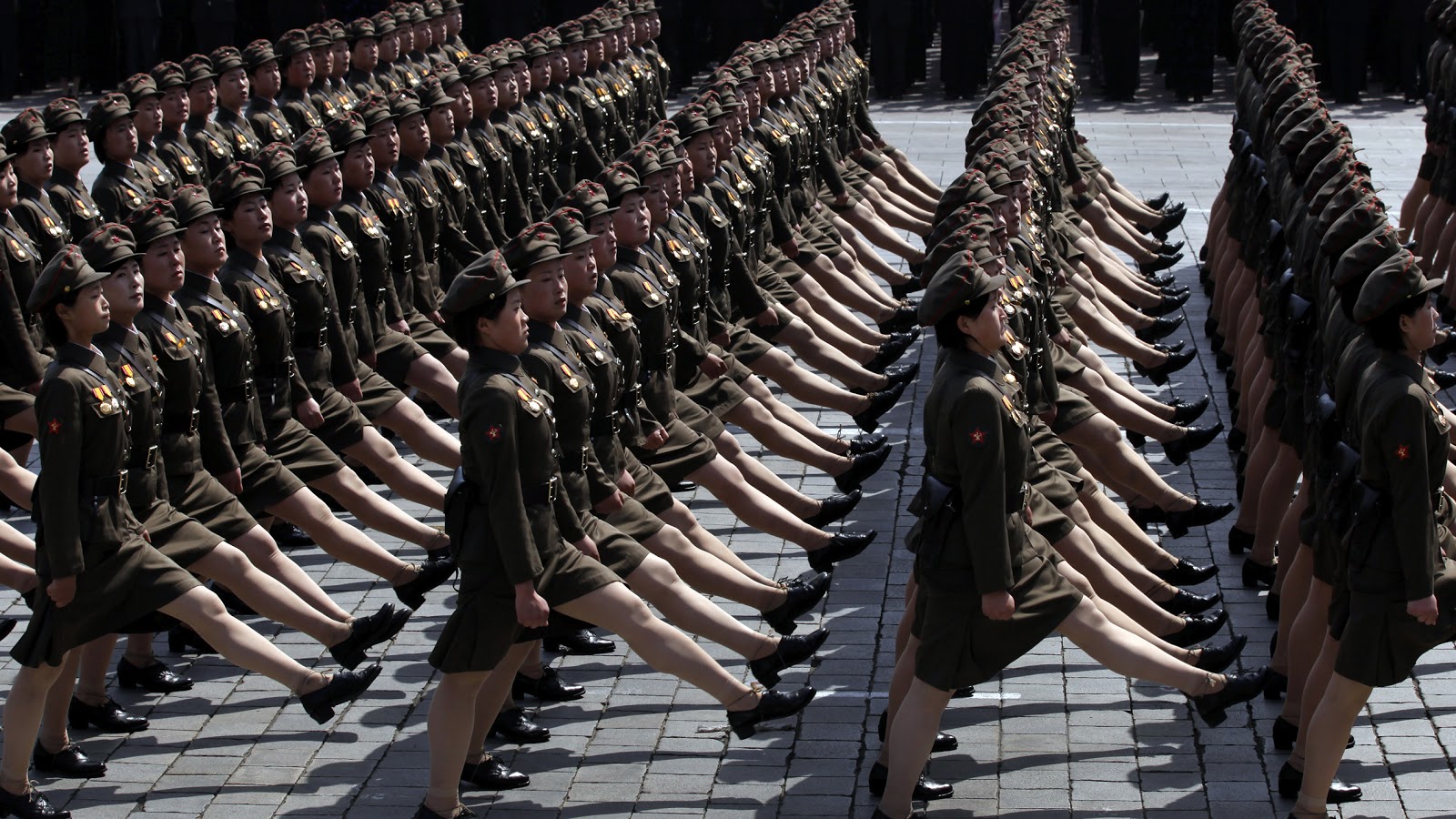
North Korea has loaded nuclear missiles on to the launchers. North Korea shut down access for South Koreans to cross the border to work in their factories. North Korea has just told foreigners in the South to "get out". Despite all of this, experts on North Korea are calling for calm.
Secretary of Defense Hagel seems to have a different opinion. The F-22s are now back in air (after having being grounded for continued problems with the oxygen generators). They are performing combat air patrols (CAP) in South Korea. The US, along with Japan and South Korea, have dispatched seven radar equipped destroyers. The destroyers are the best choice for countering the missile threats. A good move by the US but one that could drive the North Korean leader to actually launched some type of attack (mortar or artillery strikes) to prove he is serious and not afraid.
Here is what is real question that is going unasked, why now? North Korea and South Korea seemed to be on the verge of normalizing relations when suddenly ended. What does North Korea have to gain by potentially escalating things to the point where one side or the other feels compelled to launch a first strike?
China has massed troops on the border with North Korea as I've previously stated. That would appear to signal that China is not in support of hostilities. Why then is North Korea escalating? The only conclusion is there is more being discussed then we are aware of. Perhaps China or Russia want a destabilized Korean peninsula for some grander strategy and unfortunately, the new North Korean leader is not experience enough to know he is being duped.
The latest report is the missile will be launched tomorrow. Let's hope that the professor and NY Times are right.
Subscribe to:
Posts (Atom)